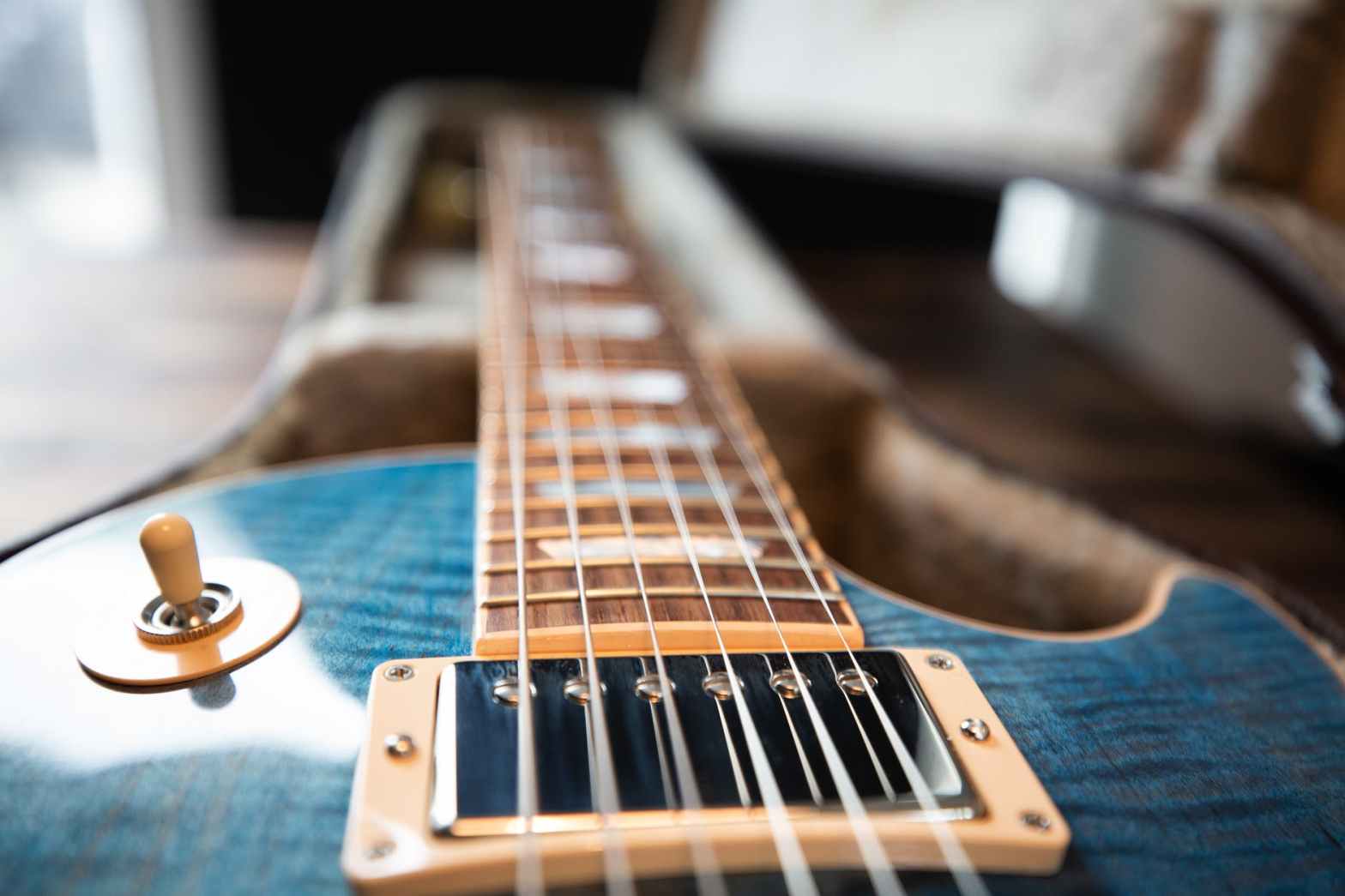
This week, I will be covering an important specification for any guitar. As my title spoils, this specification is scale length. Scale length is the distance (usually inches) between the nut at the base of the headstock to the bridge saddles by the tail piece. This distance matters for many aspects of the guitar. For example, the scale length affects playability, tone, and overall construction.
Scale length impacts playability by affecting the tension on the strings. A common scale length used by Gibson is 24.75 inches, which is relatively short for a scale length, and player often claim that this length helps bending strings at any gauge much easier. However, the tone tends to be deeper and warmer which is not always the desired sound. On the other end of the spectrum, there is the scale length Fender typically uses which is 25.5 inches , only .75 of an inch longer than Gibson’s, which does the exact opposite for playability and tone. The playing on this scale length feels stiffer but has a bell-like chime in its overall tone. Of course, the woods and electronics that make up the guitar impact the tones and resonance (check out my other blogs here to read more about that). I believe that the combination of all these components (scale length, materials, and electronics) make up the identity of the most popular and unique instruments. The distinct sound of the Stratocaster in Pink Floyd’s Another Brick in the Wall pt.2 and the thick buttery sound of the Les Paul in Guns ‘n’ Roses’ Sweet Child ‘O Mine are noticeable once guitarists understand the components that make the instrument.
Let me know anything more about scale length in the comments below! If you have any questions or recommendations, leave them in the comments as well.
-ZAC
 Drop Z Tuning